I am a field geologist and petrologist. I am principally interested in better understanding the processes that create new continental crust at subduction zones, and better understanding how these processes might have evolved over Earth’s history. I use a wide range of techniques to address these fundamental questions: field work, petrology, major and trace element geochemistry, geochronology, isotope geochemistry, and a range of modeling tools.
Research
My research is primarily rooted in field work. Much of this field work is located the exposed intrusive igneous roots of ancient volcanic arcs. I complement this field work with a range of analytical techniques and also multiple numerical modeling approaches to better understand the fundamental chemical and physical processes in volcanics arcs and to constrain their timescales. Through this work, we can better understand the fundamental processes active within modern subduction zone systems, and how these systems have contributed to evolution of continental crust over Earth’s history.
Arc processes exposed in the southernmost Sierra Nevada
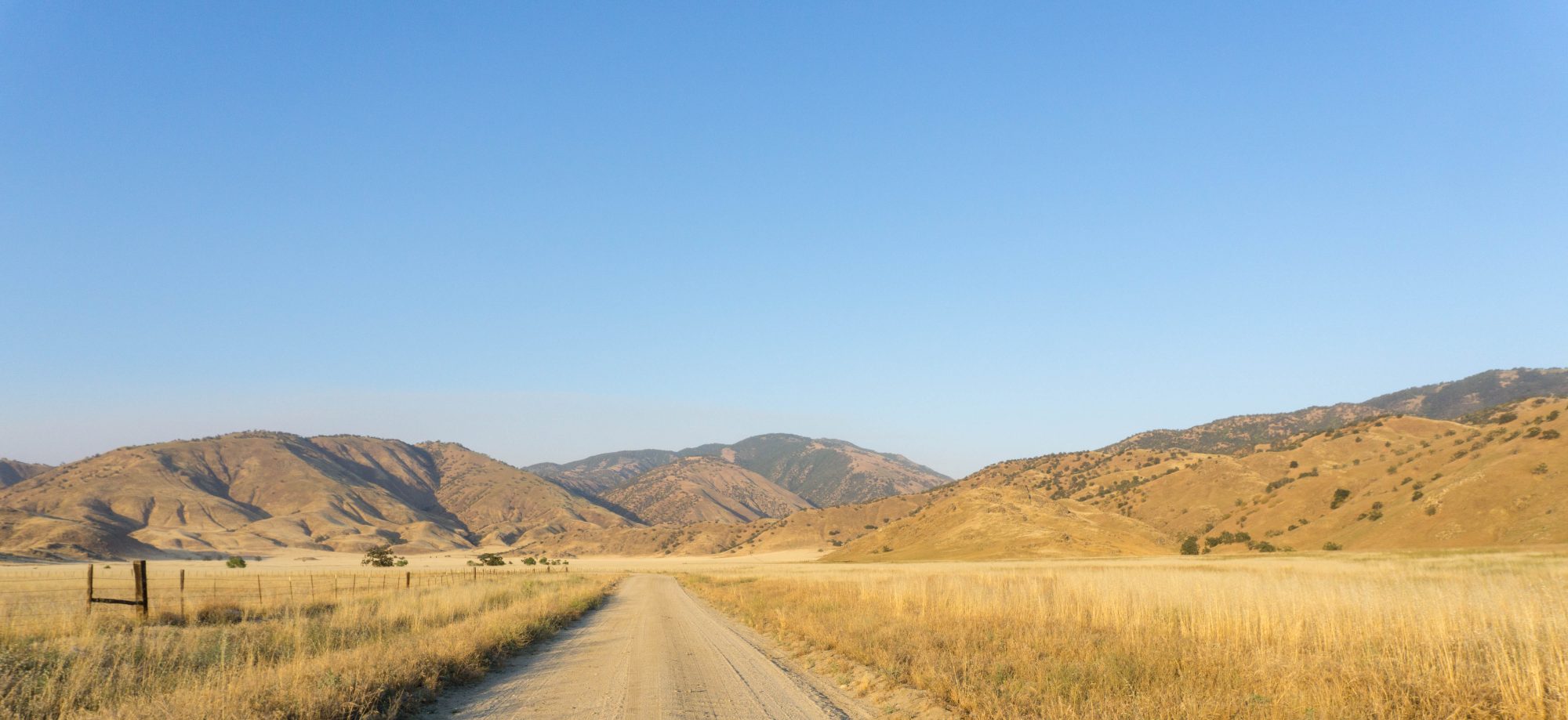
The Sierra Nevada Batholith in California was formed more than 80 million years ago in a volcanic arc system much like the present day Andes. Today, the Sierra Nevada exposes the root of this volcanic system, primarily comprising granites and other shallowly emplaced felsic lithologies. The southernmost Sierra Nevada are exceptional in that they expose a 30 km thick arc crust section from these shallow granites to gabbros emplaced near the base of the crust. As a result, this section offers a rare opportunity to study how magmas are transported from the mantle through a volcanic arc, and how the magma cools, fractionates, and evolves along this path.
Differentiation and stratification
The crustal section in the Sierra Nevada reveals a distinct dichotomy between the lower crust and the middle and upper crust. In my work I have shown that the lower crust exposes melt poor, dense mafic cumulates, while the middle and upper crust consist of less dense felsic granitoids approaching melt compositions. Additionally, I have shown that these rocks preserve a different magmatic structures, with the lower crust primarily exposing horizontal magmatic foliations while steep to vertical foliations are exposed in the middle and upper crust.
The contrasting lithologies and structures in the upper and lower crust result in a density stratified crustal profile, and have allowed me to infer the dominant processes and controls on magma differentiation and emplacement.

Rapid construction of a crustal section
As part of my study of the Sierra Nevada crustal section, I have undertaken a CA-TIMS U/Pb zircon geochronology project to constrain the construction timescales for this section. In this work, I have dated samples from all crustal levels and the full range of exposed lithologies, and show that the crustal section was constructed over a remarkably short timescale of 1-1.5 million years. This result has exciting implications for the thermal history of the arc and for the fluxes of magma in arc settings.

Relevant publications
- Klein, B.Z., & Jagoutz, O. 2021, Construction of a trans-crustal magma system: Building the Bear Valley Intrusive Suite, Southern Sierra Nevada, California. Earth and Planetary Science Letters, 553
- Klein, B.Z., Jagoutz, O. & Ramezani, J. 2020, High precision geochronology requires that ultra-fast mantle-derived magmatic fluxes built the trans-crustal Bear Valley Intrusive Suite, Sierra Nevada, CA, Geology, 49(1), 106-110
- Rezeau, H., Klein, B.Z. & Jagoutz, O. 2021, Mixing dry and wet magmas in the lower crust of a continental arc: New petrological insights from the Bear Valley Intrusive Suite, southern Sierra Nevada, California. Contributions to Mineralogy and Petrology, 176(73)
- Rezeau, H., Jagoutz, O., Beaudry, P., Klein, B.Z., Izon, G., Ono, S. 2024, Lower crustal assimilation revealed by sulfur isotope systematics of the Bear Valley Intrusive Suite, southern Sierra Nevada Batholith, California, USA. Contributions to Mineralogy and Petrology, 176(9)
Back to top
Global magmatic differentiation
Originally motivated by my observations from the Southern Sierra Nevada, I have pursued a number of studies aimed at thinking more broadly about subduction zone magmatism, and to use what we have learned from studying arc crustal sections, combined with constraints from experimental studies, global datasets of arc lavas, and phase equilibria modeling to constrain processes at arcs globally. Using these methods, I have shown that hydrous fractional crystallization is significantly more efficient for the generation of felsic arc magmas than partial melting, and that many of the common arguments for magma differentiation via partial melting are equally permissive of fractional crystallization (Jagoutz and Klein, 2018; American Journal of Science). I have subsequently extending these same observations and constraints to interrogate a dataset of global arc magmas to characterize the role of (hydrous) fractional crystallization in the generation of evolved melts at active arcs, and to better understand how this process differs in continental and island arcs.
Using these studies, I have shown that magmas are produced with a range of H2O contents at both continental and island arcs, but that in general, continental arc magmas are somewhat more hydrous. Further, I developed the MnO/MgO ratio in erupted basalts as a more robust proxy for the role of garnet fractionation (indicative of high pressure storage in the lower crust and/or lithospheric mantle) that is more robust than trace element-based proxies, which are highly sensitive to primary magma compositions (see below figure).

Relevant Publications
- Klein, B.Z., Jagoutz, O., Schmidt, M.W. & Kueter, N. 2023, A global assessment of the controls on the fractionation of arc magmas. Geochemistry, Geophysics, Geosystems, 24(5)
- Klein, B.Z. & Müntener, O. 2023, Mn/Mg ratios of arc basalts highlight the role of early garnet fractionation. Geochemical Perspectives Letters, 25
- Jagoutz, O. & Klein, B.Z. 2018, On the importance of crystallization-differentiation for the generation of SiO2-rich melts and the compositional build-up of arc (and continental) crust. American Journal of Science, 318(1), 29-63
- Liu, Z., Jagoutz, O., Rezeau, H., Zhang, H.-L. L., Klein, B.Z., Molitor, Z., Meng, X.-Y., Zhu, D.-C., 2026, A Whole-Rock Geochemistry-Based Semi-quantitative Proxy for Magmatic Oxygen Fugacity. Earth and Planetary Science Letters, 673
Back to top
Accessory mineral systematics
Accessory minerals like zircon and apatite have contributed to our understanding of a huge range of geologic processes including the construction of plutons, the rates of flood basalt eruptions, the formation of critical mineral deposits, and the evolution of continental crust. However, fundamental questions relating to our study of these phases still exist. Recently, I have worked to understand 1) how to best interpret overdispersed zircon U-Pb data; 2) the processes by which zircon crystallizes from silicate melts; and 3) the stability of apatite in igneous systems.
Interpreting U-Pb dates
As high precision zircon geochronology datasets become more abundant, it is increasingly typical to observe overdispersed zircon ages in igneous systems – that is, samples where there is a spread in ages that cannot be explained solely by analytical errors. These overdispersed data provide critical information about the duration and rates of cooling and crystallization within magma chambers. However, the interpretation of these data is a complex problem: crystallization and nucleation rates are poorly constrained and likely variable, while additional processes like armoring (where zircon are included in other phases) introduces further complexity.
In a recent study, I highlighted many of these complexities, and showed how different assumptions about nucleation and growth rates can produce radically different zircon age distributions (see below figure). Instead, we provide two equations that can be used to conservatively constrain the crystallization duration in both overdispersed data and datasets that do not show resolvable dispersion, independent of underlying distributions. This approach provides easily calculated, interpretable baselines for discussing zircon crystallization durations.

Dendritic zircon crystallization

It is commonly assumed that oscillatory (concentrically) zoning in most minerals, including zircon, preserve a record of prograde growth analogous to tree rings – the innermost oscillatory zone must have grown first, and the outermost zone records the last growth. However, with co-authors we have recently provided evidence (see above figure) for the production of concentric zoning in zircon by an initial dendritic (snow-flake like) growth phase, followed by subsequent infilling or ripening to produce a euhedral zircon crystal. This process challenges the classical interpretation of zircon growth, and further suggests that zircon can largely form through disequilibrium crystallization, raising critical questions about trace element partitioning between zircon and melt. Ongoing research in this topic is aimed at better understanding how common these non-equilibrium growth processes are, and further constraining the trace element patterns that these processes generate.
Apatite stability
Exciting new work (currently in review) presenting a new model for apatite stability in igneous melts, based on a large compilation of experimental apatite-saturated melts. Stay tuned!
Relevant Publications
- Klein, B.Z., & Eddy, M.P. 2023, What’s in an Age? Calculation and interpretation of ages and durations from U-Pb zircon geochronology of igneous rocks. Geological Society of America Bulletin, 136(1-2)
- Gillespie, J., Klein, B.Z., Moore, J., Müntener, O., & Baumgartner, L.P., 2024, A dendritic growth mechanism for producing oscillatory zonation in igneous zircon. Geology, 53(2)
- Klein, B.Z., Jagoutz, O. & Ramezani, J. 2020, High precision geochronology requires that ultra-fast mantle-derived magmatic fluxes built the trans-crustal Bear Valley Intrusive Suite, Sierra Nevada, CA, Geology, 49(1), 106-110
- Klein, B.Z., Müntener, O., Gillespie, J. & F. Marxer, Apatite Saturation Revisited: new model formulations and applications to igneous rocks, In review at Contributions to Mineralogy and Petrology
Back to top
Subduction zone diapirsm and relamination(?)
An exciting new theory developed over the last ~20 years suggests that cold, buoyant material on top of downgoing subducted slabs (consisting of mélange and/or sediments or serpentinites) can nucleate diapirs that subsequently ascend into the mantle wedge. Through this process, the material may melt at higher temperatures than would be expected on the slab top, or in some scenarios may even transit the mantle wedge and be relaminated to the base of the overriding plate. This provocative model has inspired significant work, ranging from isotope geochemistry studies of subduction zone magmas to experimental petrology work exploring the melting products of mélange at mantle wedge temperatures. I have published a number of studies on this subject, mostly focusing on the dynamics of diapir nucleation and ascent. Through this work, I showed that three variables control diapir formation: 1) buoyant layer thickness; 2) subduction zone thermal state, which is dominantly controlled by subducting plate age and velocity; and 3) composition of buoyant material. Through this work, I showed that at least in some arcs we should expect a meaningful flux of relaminating material to the base of the arc crust, representing an important mechanism for the construction of felsic continental crust.

Relevant Publications
- Klein, B.Z., Behn, M.D., 2025, The impact of mélange formation on the H2O budget and strength of the subduction zone interface. Geophysical Research Letters, 52(7)
- Klein, B.Z. & Behn, M.D. 2021, On the evolution and fate of sediment diapirs in subduction zones. Geochemistry, Geophysics, Geosystems, 22(11)
- Codillo, E.A., Le Roux, V., Klein, B.Z., Behn, M.D., Marschall, H.R., Bebout, G.E. 2023, The ascent of subduction zone mélanges: experimental constraints on mélange rock densities and solidus temperatures. Earth and Planetary Science Letters, 621(1)
Changes to subduction zone processes over Earth’s history
I am particularly interested in understanding how subduction zone processes may have varied over Earth’s history. Too often, the argument over early Earth plate tectonics is distilled to either there were subduction zones identical to what we observe in modern systems, or subduction zones did not exist in the early Earth. This discourse leaves little room for the possibility that subduction zones were active on the early Earth, but that, due to a range of factors, this process and its products are not identical to what we observe today. By using both phase equilibria and geodynamic modeling, I have shown that subducted slabs in the early Earth would have rarely if ever stagnated in the mantle transition zone, a behavior that we observe in many slabs today.

Model development
As part of my modeling work, I have been involved in the development of SiStER, an easy to use, flexible, and efficient finite difference marker-in-cell geodynamic modeling code implemented in MATLAB. You can download SiStER here.
Relevant Publications
- Klein, B.Z., Jagoutz. O & Behn, M.D. 2017, Archean crustal compositions promote full mantle convection. Earth and Planetary Science Letters 474, 516-526
- Olive, J.A., Behn, M.D., Mittelstaedt, E., Ito, G. & Klein, B.Z. 2016, The role of elasticity in simulating long-term tectonic extension. Geophysical Journal International 205(2), 728-743
Contact
Please be in touch if you have any questions about my research:
Benjamin Klein
Institute of Earth Sciences, University of Lausanne